Biggest Q60B Q60 Q60Bd Qled Buying Mistakes (And How to Avoid Them)
Introduction
The Q60 series — often marketed under names like Q60, Q60B, Q60Bd and generally referred to as Samsung QLED entry-to-mid-level models — attracts buyers who want bright colors and an upgraded picture without the premium price of higher-tier QLEDs or OLED. These sets can deliver vivid HDR highlights, saturated colors thanks to quantum dot technology, and smart TV features that fit most living rooms. Yet buyers commonly make the same mistakes when choosing among Q60-branded TVs. This article explains the pitfalls, analyzes what the Q60 family typically offers in real-world use, and gives practical advice to land the right model for movies, sports, gaming, and everyday streaming.
Typical buyer expectations vs. reality
People shopping the Q60 line often expect "QLED" to be synonymous with flagship-level performance. In reality, the Q60 models are positioned as value QLEDs: they use a quantum dot layer to improve color volume over standard LED/LCDs, but many trade some high-end features (full-array local dimming, extreme peak brightness, or top-tier gaming ports) to hit a price point. Knowing which capabilities are standard and which vary by specific model year or regional suffix prevents disappointment.
Detailed product review and analysis
This review treats the Q60 family as a group of related models rather than a single SKU because the differences between Q60, Q60B, and Q60Bd are normally incremental — often changing by year, region, tuner configuration, or stand design. The analysis focuses on picture quality, HDR behavior, viewing angles, smart features, gaming suitability, and practical ownership considerations.
Picture quality and panel characteristics
Q60 models typically use VA-type LCD panels coupled with a quantum dot layer. The quantum dot improves color saturation and makes SDR and HDR colors pop compared with conventional LED TVs at the same price. Conversely, VA panels usually have very good native contrast for darker rooms but narrower viewing angles than IPS panels. This means the picture looks best when viewers sit near the center axis of the screen; off-axis viewers may notice washed-out colors and reduced contrast.
HDR and brightness behavior
These sets usually deliver competent HDR performance for everyday viewing—bright specular highlights and colorful scenes stand out. However, peak brightness on entry-level QLEDs is often lower than on upper-tier QLEDs, and full-array local dimming (FALD) may be absent or limited. The practical result: highlight detail in mixed bright/dark scenes is improved over standard LED displays, but black level "bloom" and haloing can appear around bright objects on dark backgrounds. For buyers who watch HDR movies in a dim room and expect cinema-grade inky blacks, this can be disappointing.
Smart platform and software
Q60 models commonly run Samsung's Tizen smart TV platform. Tizen is mature, has a broad app selection, and provides a consistent navigation experience. Software updates and app availability vary by region and model year, so buyers should confirm that essential streaming apps are supported and that the TV receives firmware updates for the expected lifetime of ownership.
Gaming suitability
Many Q60 variants are perfectly fine for casual and competitive gaming: they often include a low input lag mode and support for VRR-like features on some iterations. That said, buyers should not assume full HDMI 2.1 bandwidth (necessary for 4K at 120Hz gaming) is always present; some Q60 models only offer HDMI 2.0 or limited HDMI 2.1 features. For owners of next-gen consoles who want 4K120, always verify the exact HDMI/version and refresh-rate support on the specific SKU.
Audio and design considerations
Builtin speakers on Q60 models are generally serviceable for dialogue and everyday use but often lack the low-end punch or immersive soundstage needed for home theater experiences. Most buyers upgrade to a soundbar or AV receiver. The physical design (stand style, bezel width, VESA mount placement) varies by sub-model; ensuring compatibility with a preferred wall mount or furniture is a critical but easily overlooked step.
Common mistakes buyers make (and how to avoid them)
- Assuming “QLED” equals flagship performance. QLED refers to the quantum-dot layer, not the entire performance envelope. Verify local dimming, peak brightness, and panel type rather than relying on the QLED badge alone.
- Not checking the exact model number and suffix. Letters like B, Bd, or other suffixes often indicate year, regional tuner configuration, or minor revisions. Two TVs labeled “Q60” from different years can differ materially in ports, software, and performance.
- Buying the biggest size without considering viewing distance and room layout. Oversized TVs in small rooms can cause eye strain and make imperfections more noticeable. Match screen size to viewing distance and resolution expectations.
- Overlooking viewing angles. VA panels have narrower off-axis performance. For wide seating arrangements, test the picture from sofa side seats or consider a TV with better viewing angles.
- Assuming full HDMI 2.1 support. If 4K120 is a requirement, confirm the TV’s HDMI capabilities in the official spec sheet; not all Q60-family models provide full bandwidth.
- Underestimating sound needs. Built-in speakers are often middling; buyers who value immersive sound for movies or gaming should budget for a soundbar or speaker system.
- Ignoring wall-mounting and stand constraints. The stand footprint or VESA pattern might not fit the intended cabinet or wall bracket. Check exact measurements before purchase.
- Expecting Dolby Vision support. Samsung historically favors HDR10 and HDR10+; Dolby Vision support is not typical. If Dolby Vision is important, verify support explicitly.
Pros & Cons
Pros
- Strong color saturation and vivid images thanks to quantum dot technology.
- Good contrast and deep-looking blacks in center-viewing situations because of VA panels.
- Generally affordable entry-to-mid-level pricing compared with flagship QLEDs and OLED.
- Mature smart TV platform with a wide selection of streaming apps in most regions.
- Multiple sizes available, which makes it easy to match living room or bedroom needs.
Cons
- Narrow viewing angles compared with IPS or OLED panels — image quality drops off from the sides.
- Limited or absent full-array local dimming on many models, causing haloing around bright objects on dark backgrounds.
- Peak HDR brightness and highlight longevity can be lower than higher-tier QLED models.
- Audio is often only adequate; many buyers will want an external sound solution.
- Feature parity (ports, HDMI versions, firmware updates) varies by region and release year — buyer must confirm exact SKU details.
Comparison table: Q60 family at a glance
| Model/Label | Typical panel / tech | Best for | Typical strengths | Typical limitations |
|---|---|---|---|---|
| Q60 / Q60 (base) | QLED (quantum dot) with VA-type LCD | Everyday streaming, family rooms | Good color, affordable, solid contrast for price | Limited HDR peak brightness; variable HDMI features |
| Q60B | QLED (mid-level implementation) | Buyers seeking QLED color on a budget | Improved color volume vs non-QLED, consistent smart features | Differences across years/regions; check port and tuner specs |
| Q60Bd | Regional/variant QLED (suffix indicates tweaks) | Users needing local tuner or region-specific features | Same core image characteristics as Q60; regional fit | Suffix may denote different stand, tuner, or small hardware changes — confirm exact SKU |
| QLED (series) | Quantum-dot enhanced LCD | Buyers wanting saturated color and bright accents | Vivid colors, wide color gamut, smart OS | Not the same as OLED; blacks/angles differ |
Buying guide: how to choose the right Q60 variant
When evaluating Q60-family TVs, use the following checklist and practical tips to avoid common mistakes and make an informed purchase.
Discover deals on TVs & Home Theater — updated daily.
Browse Now →1. Verify the exact model number and regional suffix
Model numbers and suffixes matter. They clarify the release year, tuner type and sometimes the stand design. Before buying, compare the precise SKU (for example what follows the Q60 designation) against the manufacturer’s spec sheet. If a store listing shows only a shorthand name, ask for the full model number.
2. Confirm HDMI and gaming features if applicable
If gaming on modern consoles or high-end PCs is a priority, verify support for higher refresh rates and standards like VRR and 4K 120Hz. Not all Q60-family models include full HDMI 2.1 bandwidth, and some offer only limited features via a single HDMI port. Check the spec sheet for input lag numbers and whether a dedicated "Game Mode" is available.
3. Match screen size to room and seating
Decide where the TV will live, then measure. Consider viewing angle limitations: a centrally oriented seating arrangement gets the most from a VA-panel QLED. If the room has multiple seating positions, consider either a smaller size for uniform viewing or a different panel technology with wider angles.
4. Test the picture in the store (or read measured reviews)
Store demos can be over-brightened, but they are still useful to observe viewing angle beha…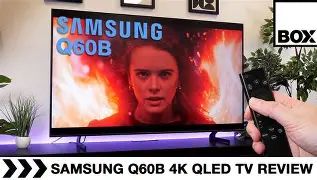
5. Assess sound and accessory needs
Plan for audio. If the TV replaces a larger home theater system or if the room benefits from a wider soundstage, budget for a soundbar or receiver. Also confirm VESA mount specs and the position of ports to ensure compatibility with a wall mount and cable management preferences.
6. Look for real-world use examples
Think about how the TV will be used day-to-day: streaming, sports, games, or a mixed household. For fast-action sports in a bright living room, prioritize peak brightness and anti-reflective performance. For movie nights in a dim room, prioritize models with better perceived contrast and tighter local dimming behavior.
7. Confirm software and support expectations
Smart platform longevity matters. Confirm that essential streaming apps are supported and that the brand has a history of firmware updates. If the TV will be on a home network with multiple smart devices, check compatibility with preferred voice assistants and ecosystem features.
8. Ask about warranties and return policies
Because picture uniformity issues or software quirks can show up after extended use, ensure the retailer’s return window and the manufacturer's warranty meet expectations. For buyers concerned about panel defects, a longer return window reduces risk.
Looking for the best TVs & Home Theater deals on Amazon?
See Deals →Real-world scenarios and recommended approaches
Below are four common buyer scenarios and concise recommendations to avoid regret.
Family living room — mixed usage (streaming, sports, casual gaming)
Recommendation: Choose a Q60 variant in a size appropriate for the seating distance, confirm HDR performance in bright scenes (for sports), and plan for a modest soundbar. Prioritize a model with decent peak brightness and anti-reflective coating.
Dedicated dark-room movie setup
Recommendation: A Q60 may be acceptable, but buyers who crave deep blacks should compare higher-tier QLEDs with full-array local dimming or consider OLED. If choosing a Q60, pick a size that doesn't exaggerate haloing and look for professional measurements showing tight local dimming behavior.
Gaming-focused buyer with a next-gen console
Recommendation: Verify HDMI bandwidth and 4K@120Hz support on the exact SKU, check input lag figures in Game Mode, and confirm VRR support. If full 4K120 is essential, ensure the model explicitly advertises it.
Wide seating area or open-plan room
Recommendation: Because VA-typed Q60 panels narrow viewing angles, consider a different panel technology or a screen size that reduces the effect from side seats. Alternatively, position seating to favor the center axis or choose a higher-end QLED/OLED with better off-axis performance.
Conclusion
The Q60 family — including models marketed as Q60, Q60B, or Q60Bd — offers a compelling balance of color performance, smart features, and value for many buyers. The most common buying mistakes stem from assumptions: assuming a QLED badge guarantees flagship performance, overlooking suffix and regional differences, or failing to match TV capabilities to a room's lighting and seating layout. By confirming the exact model number, checking HDMI and HDR specs, testing viewing angles, and planning for audio and mounting, buyers can avoid buyer’s remorse and choose the Q60 variant that best fits their real-world needs.